
There is a vital difference between Bofors and Rafale, explains Shekhar Gupta.
The Brics line-up has yielded to a shaky China-India story, with new question marks over China even as India remains a "B+" performer, says T N Ninan.
Sustaining anything in the region of 7% growth should be good enough in a troubled and risk-laden world, says T N Ninan.

India's primary failings have been in its inability to deliver health and education for all.
The government's stance in the face of uncertain prospects for the private sector has been that public sector investment will drive the system.

Emission norms for automobile industry should be tightened.
The prime minister seems to have turned his face away from the business of introducing serious reform, says T N Ninan.
India must focus on reforms.
Business houses don't think twice about blacklisting a newspaper.
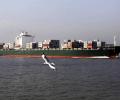
Colombo can handle more container traffic than all of India's ports put together. For a country with a long maritime tradition, this is a pathetic state of affairs, saya T N Ninan.

It has built confidence in the possibility of change; now reality has to catch up with the image and the expectation, says T N Ninan.
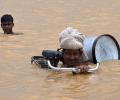
The really disturbing numbers relate to inequality.
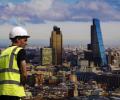
India this year will emerge as the world's seventh largest economy, up from the 12 th position in 2008.
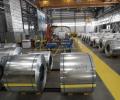
Higher import duties on steel improve the bottom lines of steel-makers, but depress those of downstream users of steel.
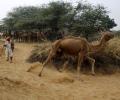
Of all the markets in which politicians interfere with prices, the land market is probably the last that will be reformed, says T N Ninan.

Some might contend that a candidate for being termed the most corrupt (or corrupting) country in the world is Switzerland.
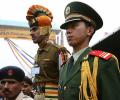
China and India have approached trade negotiations very differently: the former with confidence, the latter in a defensive crouch, says T N Ninan.

The crushing of this tiny entity by demanding creditors should be a lesson for all countries, warns T N Ninan.

The flow of economic news suggests that "good days" are not here as yet.

The government has made its initial moves, good and not-so-good, while the roll-out in some cases has been slow.

That may have reduced clutter, but it would also have reduced choice.
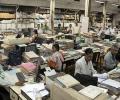
Salary hike is fine but govt must reduce support staff to get its math right.

Every country is a free trader when it sees advantage, and a trade warrior when it does not, says T N Ninan.

'We need to put aside our anxieties about the Budget for now and possibly for long, and carry on as best as we can,' advises Shreekant Sambrani.

If the surge in tax collections is sustainable, the finance minister has the elbow room to shoot for a fiscal deficit

Congress campaign seeking to paint the ruling party as anti-poor and anti-farmer seems to have unnerved the BJP, feels T N Ninan.
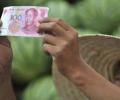
China has demonstrated that it has the power to not be isolated, and it is likely to become more powerful over time.
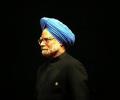
His current predicament stems from a combination of personal failing and circumstance
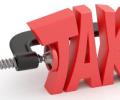
Biggest culprit behind India's eroding tax base is excise
Most encouraging thing is savings and investment rates are high.
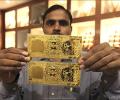
If India has more billionaires than before, it is because the Indian economy began to look more attractive to FIIs, notes T N Ninan.

Nilanjana S Roy compiles a list of the most eagerly awaited books next year.

The inflow of cheap capital has also kept the rupee at a high level, making exports uncompetitive and broadening the current account deficit despite falling oil prices.
Foreign retail chains, reluctantly allowed limited entry, have begun to make their initial moves and, like Ikea, intend to spend big money -- sometimes in the billions of dollars.

If oil prices stay at their new level of $72 or drop further, India will be in the happy position next year of enjoying a surplus on the trade account.

Politicians have continued taking people for granted and managed to stay above the law, says T N Ninan
A pro rata expansion of that number for 100 Gw means investing that much every year.

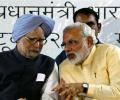
While Manmohan Singh had to deal with high oil prices, inflation and trade deficit, Narendra Modi is lucky as major threats have receded, says T N Ninan.

The total quantum of water supply has barely improved since Independence, while demand has exploded, points out T N Ninan.
When there is an enormous shortage of public hospitals, when state expenditure on health care is abysmally low by any international yardstick, tax money should be used to set up public hospitals, says T N Ninan.
